DEFENCE PRACTICE

Informed Defence

Criminal defence runs on detail, deadlines and disclosure — and disclosure now arrives by the thousands of pages, much of it scanned, handwritten, or buried in tables. Most legal software is built for commercial practice and adapted for the rest; Informed Defence is built for one job only — criminal defence. It gives every matter one secure, organised home, and takes on the work other systems leave to you: it ingests and reads the disclosure, builds the timeline, surfaces who did what, and flags what's missing — all grounded in your file and staged for your approval. Less time wrestling the paperwork. More time on the case. Order on your side of the table.

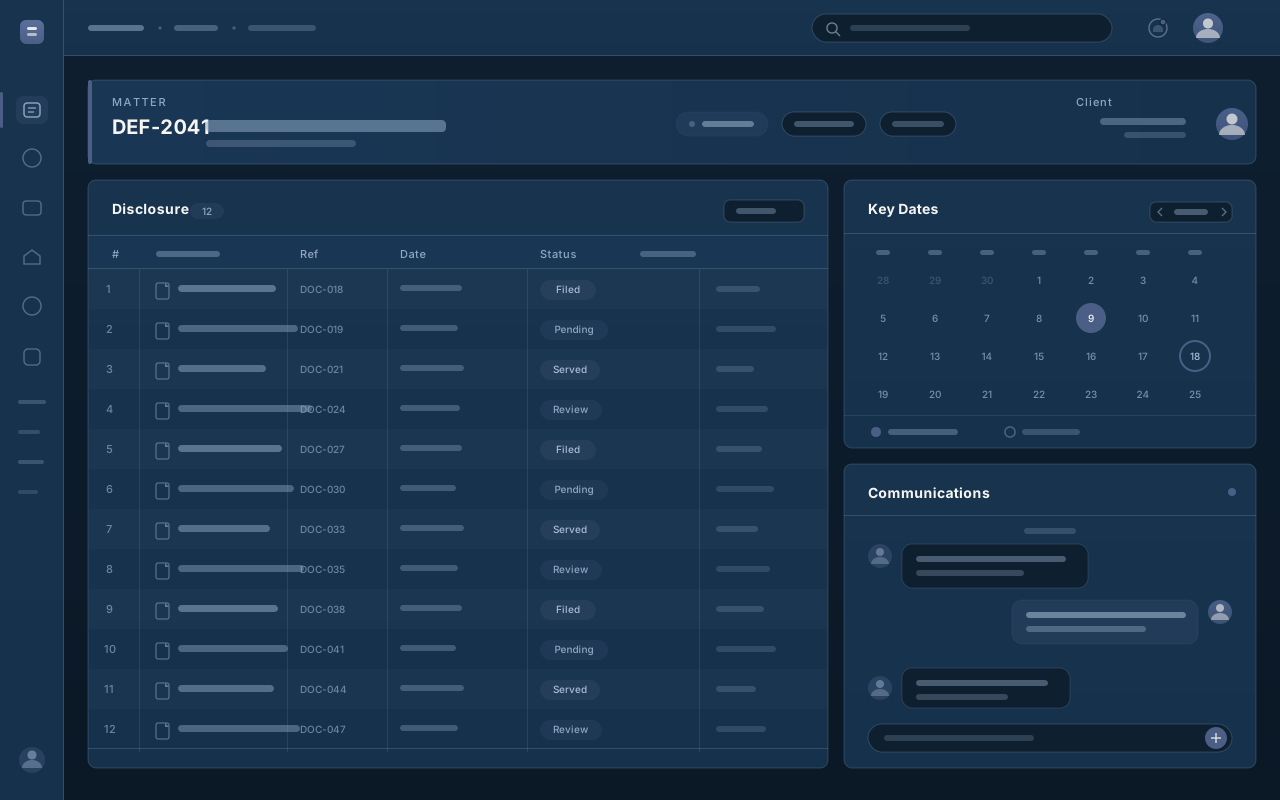
Illustrative interface of Informed Defence — all data fictional

// Capabilities

Everything a matter needs — and the first pass, done.

Built for criminal practice alone — not commercial software wearing a criminal badge — Informed Defence keeps the moving parts of a defence matter in order from first appearance to verdict, and takes on the disclosure grind itself, so your attention stays on the case, not the paperwork.

Every matter in order

One organised home per case — charges linked to the legislation, parties, co-defendants, bail, hearings, exhibits, witnesses and notes — with the court dates and deadlines tracked alongside. You always know where the matter stands.

Disclosure, ingested and read

Upload a bundle — scanned PDFs, photographs, handwriting, dense tables — and Informed Defence turns it into searchable text, parses the disclosure index, and organises it into documents you can actually work with.

Find the one document that matters

Ask the disclosure a question in plain English and get the passage that answers it, with its source. Compare statements side by side to surface contradictions and shifts in account before you reach the courtroom.

The first pass, done for you

Informed Defence reads the disclosure and proposes the groundwork — the people and their roles, the timeline of events, and the gaps against the index — every suggestion cited and staged for you to approve, edit or reject.

Ready for trial

Draft opening and closing statements grounded in cited disclosure, and build a witness-by-witness examination plan — questions, purpose, and the evidence behind each line — ready to refine for the courtroom.

Privileged by design

Per-case access control keeps sensitive matters compartmentalised within the firm, every action is attributable and timestamped, and the whole platform is built for New Zealand criminal practice.

// In depth

Built for one job.

Every other practice system treats criminal work as a sideline. Informed Defence treats it as the whole point — so the structure holds when the pressure is on, and the disclosure is read before you are.

PRACTICE CRIMINAL DEFENCE ACTIVE Disclosure Charges & elements Bail & custody Witnesses Hearings NOT IN USE Billing Conveyancing Trust accounting

// Built for criminal defence, and nothing else

Not commercial software with a criminal setting bolted on.

Almost every legal practice system starts from commercial work — billing, conveyancing, trust accounting, matters that turn on contracts — and treats criminal defence as an afterthought, if it handles it at all. Informed Defence starts from the other end. It is built solely for criminal practice, around the things that actually decide a defence: police disclosure, charges and their elements, bail and custody, the Crown's witnesses, the cross-examination. It speaks the language of the criminal courts, because that is the only work it was made for.

  • Purpose-built for criminal defence — not a civil system in disguise
  • Models real criminal practice: disclosure, charges, bail, witnesses, hearings
  • Made by a team focused on one thing — defending criminal matters in New Zealand

MATTER DEF-2041

// Order under pressure

Hold the whole matter in view, not in your head.

When a matter moves quickly, structure is what keeps you steady. Informed Defence gives each case a single, predictable shape — charges, parties, bail, hearings, exhibits and notes in one place, with the calendar of court dates and filing windows tracked alongside — so the same view serves you at first appearance, in the thick of disclosure, and on the morning of trial.

  • One organised home per matter, from intake through to disposition
  • Charges linked to the exact NZ legislation, section by section
  • Court dates, bail conditions and deadlines tracked, not remembered
847 Annotated

// Disclosure, mastered

Thousands of pages, read and ready — not waiting for you.

Police disclosure arrives in volume: scanned PDFs, photographs of handwritten notes, dense tables. Informed Defence ingests the lot, reads it with intelligence designed for exactly this material, and turns a wall of documents into something you can search by meaning. Then it does the first pass for you — classifying each document, pulling out the people and their roles, assembling the timeline, and flagging what's missing or withheld against the disclosure index. Every finding is cited to its source and proposed for your review; nothing enters the case record until you approve it.

  • Search an entire disclosure set in plain English — by meaning, not just keywords
  • Parties, roles and a chronology proposed automatically, each with citations
  • Gaps against the index flagged by severity, so the missing document is the one you chase
  • Statement comparison surfaces contradictions, ready for cross-examination
Opening statement 1 2 3 EXAMINATION PLAN Q §2 Q §5 Q §7 Q §3 Q §8

// From disclosure to the courtroom

A head start on the hardest part.

Once the disclosure is understood, Informed Defence helps you turn it into a case. It drafts opening and closing statements grounded in the evidence you've gathered, with citations back to the file, and builds an examination plan for each witness — the questions, why you're asking them, and the documents behind each line. Cross-examination points are anchored to the witness, so they hold even as the documents around them are revised. Everything is a draft: you edit, refine and finalise, and the reasoning travels with it.

  • Opening and closing statements drafted from cited disclosure
  • A witness-by-witness examination plan you can adapt for court
  • Cross-examination points anchored to the witness, with provenance you can trace
Suggested Cited Approve Edit Reject PER-CASE ACCESS · ATTRIBUTABLE RECORD

// In your hands, and confidential

An assistant, never the decision-maker.

Defence work is unforgiving of the wrong call made on your behalf. So Informed Defence keeps you in control: every suggestion is staged, cited and approved by you before it touches the record, and every analysis is grounded in your file rather than generic guesswork. Privileged material is protected by strict per-case access control — confidentiality built into the structure, not bolted on after the fact — and a complete, attributable record of who did what and when stands behind the matter from first appearance to final disposition.

  • Every suggestion grounded in your disclosure, cited, and approved by you
  • Privilege protected by per-case access control — confidential by structure
  • A full, attributable record of every change, kept as the work is done

// NEXT STEP

Your practice, in order.

See how Informed Defence handles a real matter — from the first disclosure bundle to the morning of trial.